
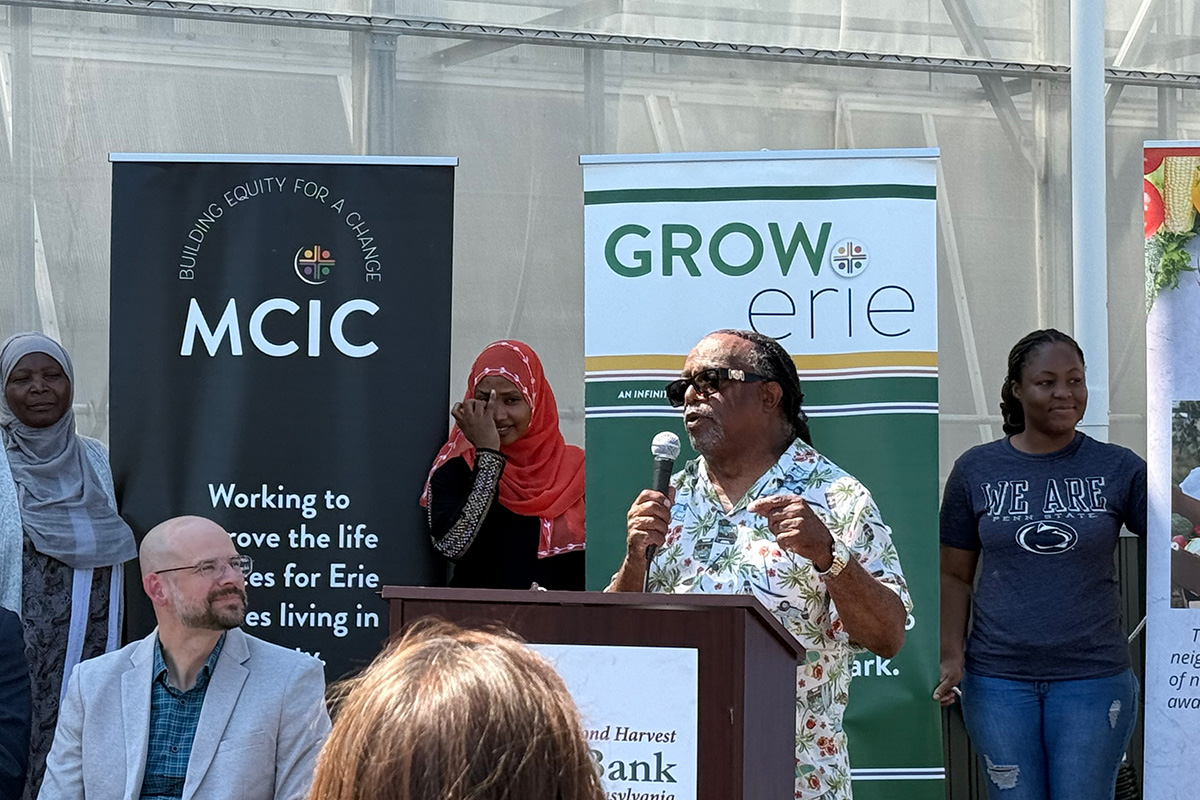
Second Harvest Food Bank of Northwest Pennsylvania and Grow Erie are proud to announce a new partnership that brings fresh, locally grown produce directly from Erie’s urban agriculture system to local families experiencing food insecurity.
This collaboration marks a step forward in strengthening the local food systems while expanding access to nutritious, Erie-grown produce. Currently, two varieties of lettuce, buttercrunch and red oakleaf, are grown at Grow Erie, which will be distributed through Second Harvest’s Marketplace and mobile distributions.
“This partnership represents innovation in both food banking and urban agriculture,” said Gregory D. Hall, Chief Executive Officer of Second Harvest Food Bank of Northwest Pennsylvania. “By working with Grow Erie we are not only making our neighbors healthier but also making our local communities healthier.”
Grow Erie uses advanced hydroponic growing methods that produce leafy greens, herbs and microgreens, year-round in a controlled environment. Plants are grown without soil using carefully managed water and nutrient systems, resulting in fresh, high-quality produce while using significantly less water than traditional field agriculture, with increased yields. Freshly harvested lettuce will move from greenhouse to distribution quickly, providing nutritious produce for families served across northwest Pennsylvania.
MCIC President, Gary Horton, commented, “This partnership is the first major step in carrying out our vision of building a healthier community.”
Together, the effort reflects a shared commitment to innovation, sustainability, and community impact, bringing together food banking and urban agriculture to address food insecurity in new ways. Beyond supporting our neighbors in need, it also strengthens Erie’s urban agricultural economy. Every head of lettuce grown here supports local jobs, strengthens our food system, and keeps resources in our community.
This partnership marks the beginning of an ongoing relationship between Second Harvest and Grow Erie, with plans to continue providing fresh produce throughout the growing year.
“This is about more than deliveries of produce,” added Gregory D. Hall. “It’s about building a stronger, more connected community for the future.”