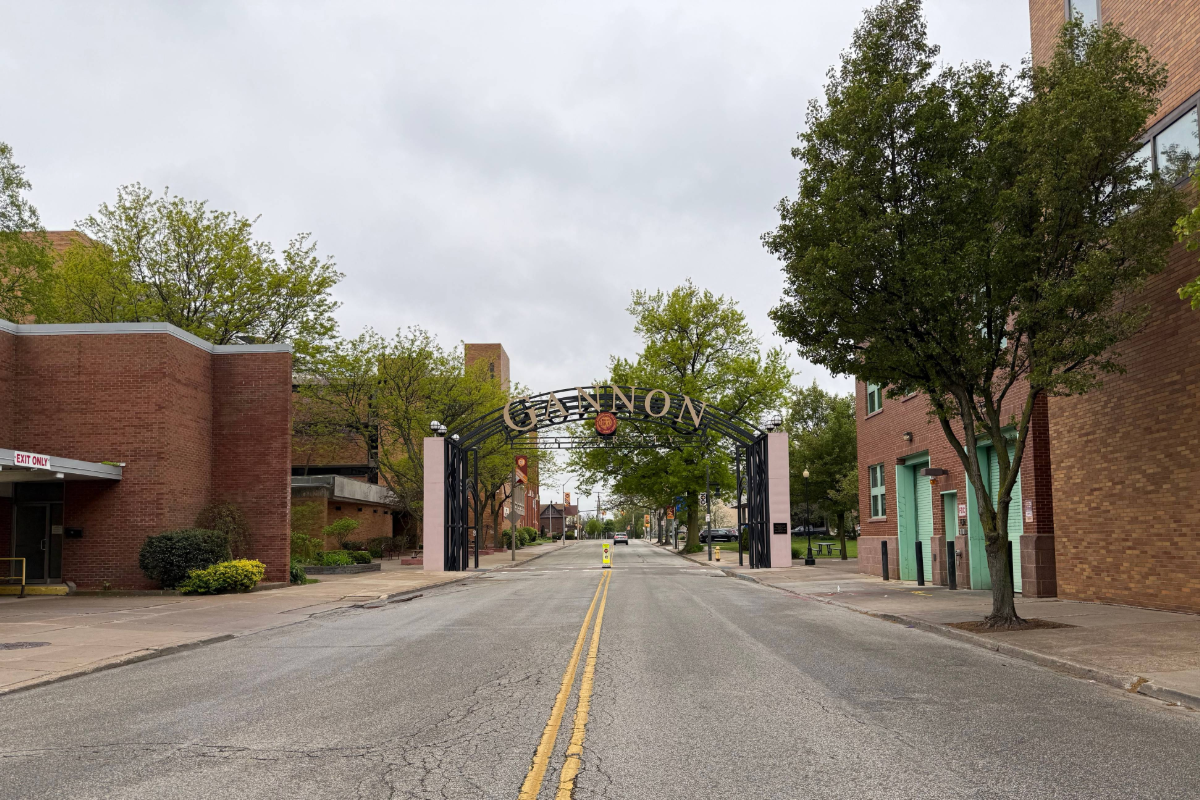
More than a dozen high school students from regional community schools will spend the next week exploring the Lake Erie watershed as part of Gannon University’s Project NePTWNE Regional Summer School of Excellence, a weeklong residential environmental science camp that provides students with immersive, hands-on research experiences at no cost.
The camp, held July 19-24, is funded through a grant from the Pennsylvania Department of Environmental Protection’s Coastal Zone Management Program with additional support from The Palumbo Charitable Trust.
Designed for students entering grades 9-12, the program removes financial barriers while introducing participants to careers in environmental science, freshwater research and conservation.
Students will live on Gannon’s campus throughout the week, working alongside Gannon and Project NePTWNE faculty, staff and student mentors as they investigate the health of Lake Erie’s coastal ecosystems through field research, laboratory analysis and collaborative scientific inquiry.
“RiSSE is about opening doors,” said Sherri Mason, Ph.D., director of Project NePTWNE. “By removing financial barriers and providing students with authentic field and laboratory experiences, we are helping them discover that they can be scientists, researchers and leaders working to protect one of our region’s greatest natural resources. We hope they leave with new skills, new confidence and a deeper connection to Lake Erie.”
The week begins Sunday evening as students move into North Hall and meet fellow campers and mentors during a welcome event.
Throughout the week, participants will conduct environmental research at several locations across the area ranging in topics, including:
- Monday: Collection of macroinvertebrates, fish and water quality samples at Four Mile Creek and
Twelve Mile Creek, followed by laboratory analysis. - Tuesday: Coastal erosion investigations along the Lake Erie Bluffs and Presque Isle State Park in
partnership with DCNR. - Wednesday: Data analysis and research activities, including “Dirty or Drinkable?” water analysis at
Project NePTWNE’s award-winning Center for Environmental Research and Education (CLEER). - Thursday: Environmental exploration and learning experiences at the Chautauqua Institution.
- Friday: Student research presentations highlighting the scientific findings and environmental
recommendations developed throughout the week.
The program emphasizes scientific field methods, data collection, water quality monitoring and ecological research while encouraging teamwork, critical thinking and environmental stewardship.
Project NePTWNE recently received the Governor’s Award for Environmental Excellence in recognition of its innovative programming that expands access to environmental education for underserved students and communities. RiSSE is one of several initiatives that reflects the project’s commitment to providing meaningful, hands-on STEM opportunities that inspire the next generation of environmental leaders.
Members of the media are invited to capture students in action throughout the week. Monday’s fieldwork and Friday’s research presentations provide particularly strong visual opportunities.